CRAMA DARIE
CRAMA DARIE
Commitment to the Future
Surrounded by protected ecosystems and guided by respect for the land, we turn challenges into opportunities. We have initiated the process of conversion to certified organic agriculture — a natural step for a terroir that deserves to be kept intact.
"The land yields where the hand works."
— Romanian proverb
The plantation borders the ROSCI0022 site "Canaralele Dunării" and the natural monument "Neojurassic Reef of Topalu" (2352). We cultivate with the responsibility that every decision affects a European protected ecosystem.
Of the total agricultural area of 38 ha, 9 hectares remain uncultivated — hedgerows, old trees, refuge zones. Nearly a quarter of the land dedicated exclusively to nature.
We aim to power the plantation from renewable sources. The Dobrogea sun doesn't just produce exceptional grapes — it also inspires us toward a sustainable future.
Since 2022 we also use indigenous yeasts for fermentation — native microorganisms of our terroir that give wines an authentic and unrepeatable character.
9 ha
uncultivated for nature
Goal
renewable energy
2022
indigenous yeasts
In Progress
organic conversion
Between the Danube and the hills of Dobrogea, between Horia, Topalu and the river water, a corner of terroir finds its expression.
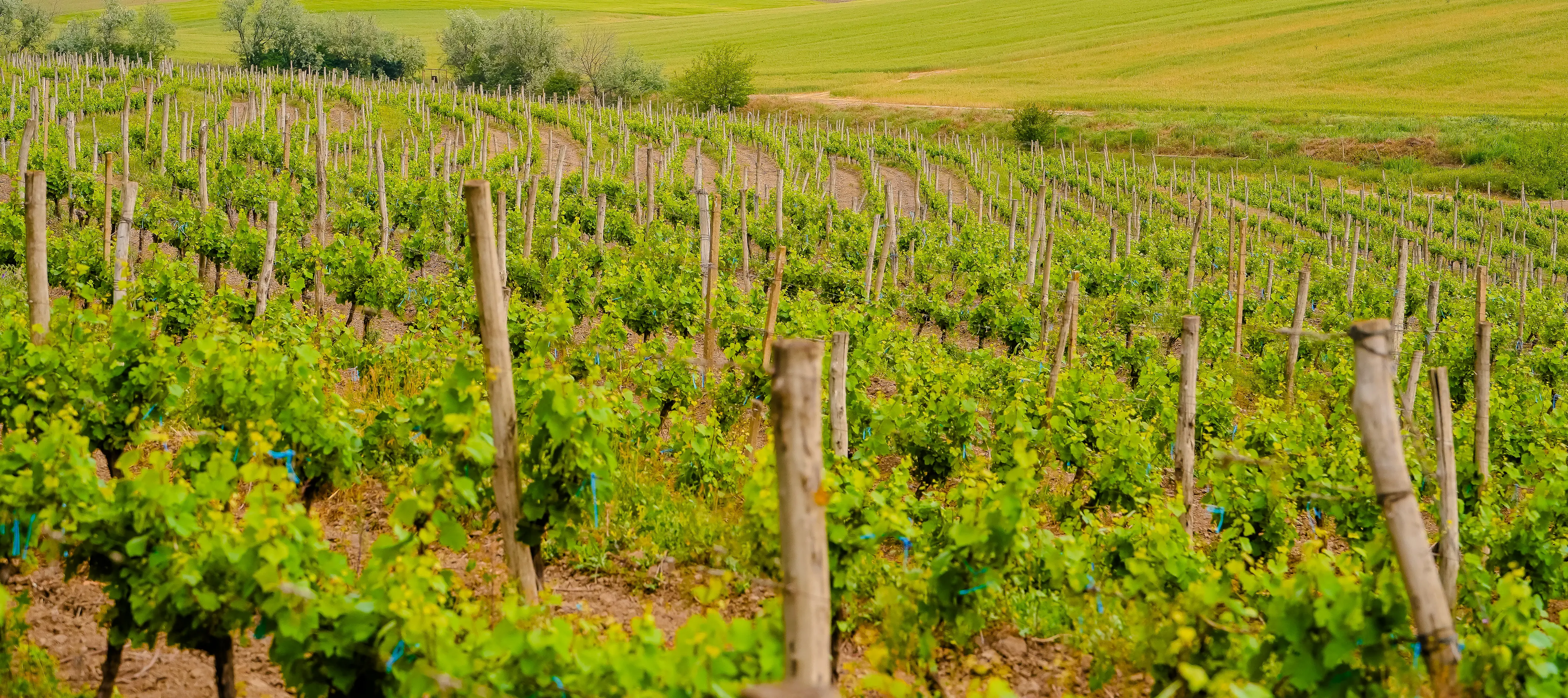
Crama Darie has its winery in the village of Topalu, right above the Danube. The vines are planted at the Horia viticultural farm, a few kilometers away on the calcareous hills, with a wide opening toward the fields.
Together, Topalu–Horia form our terroir heart: the Danube water, the Dobrogea light, and the rows of vines climbing and descending the slopes. The property has 36 hectares, of which 29 are viticultural.
Here, summer lasts long, and winters are usually mild. Rainfall is scarce, so the vines seek water deep down. Generous light and cooler nights preserve acidity and clarity of aromas.
The wind blows often, quickly dries the leaves after rain, and helps us work more cleanly, with fewer interventions in the vineyard.
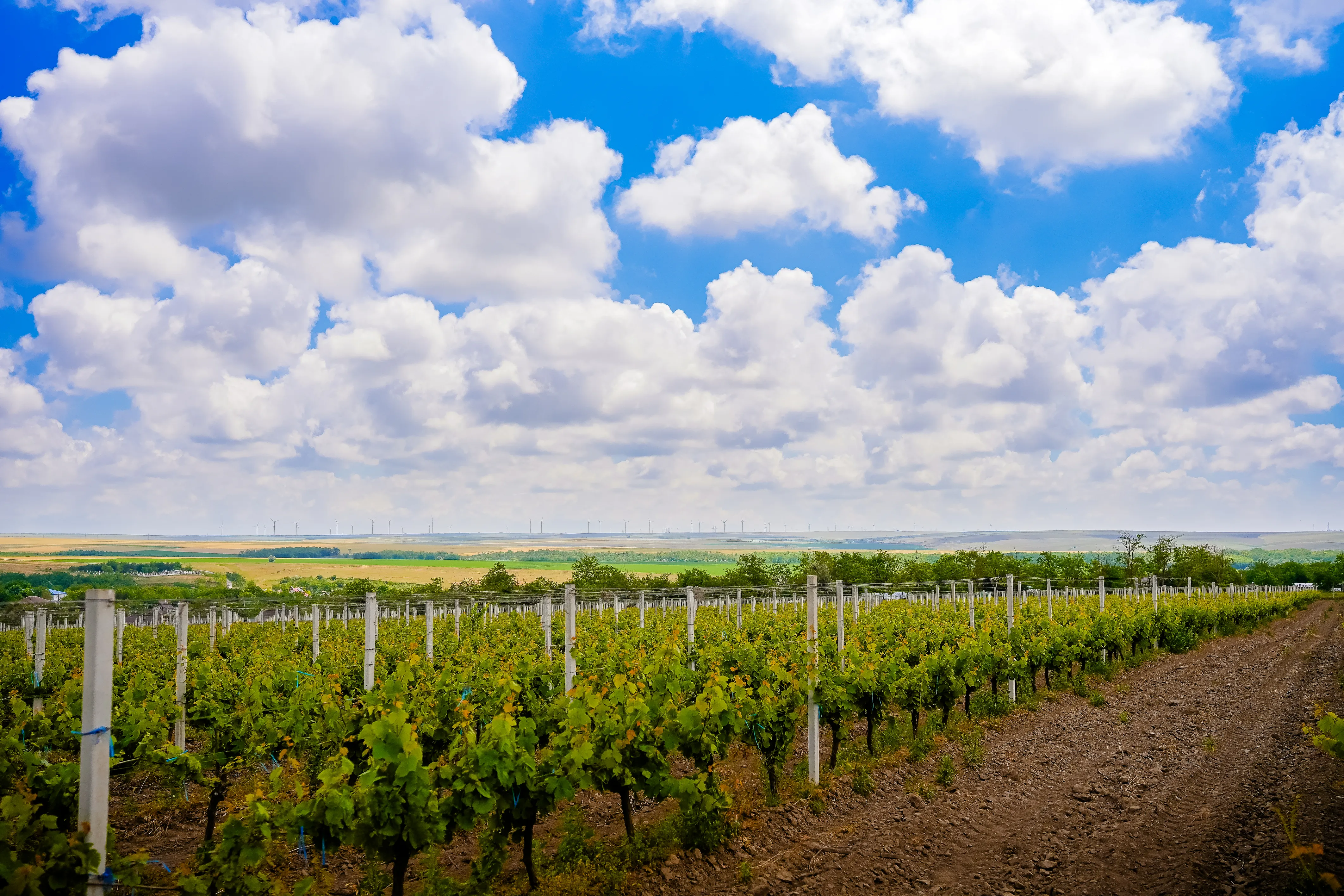
Beneath the vines of Horia we find a brownish-gray soil, rich in limestone with a sandy-clay texture. It's not a "generous" soil – and that's exactly what interests us.
White varieties benefit from the cooler, more aerated part of the soil and produce wines with notes of fruit, flowers, and subtle minerality. Red varieties draw from warmer, deeper layers: ripe tannins, structure, and density in the glass.
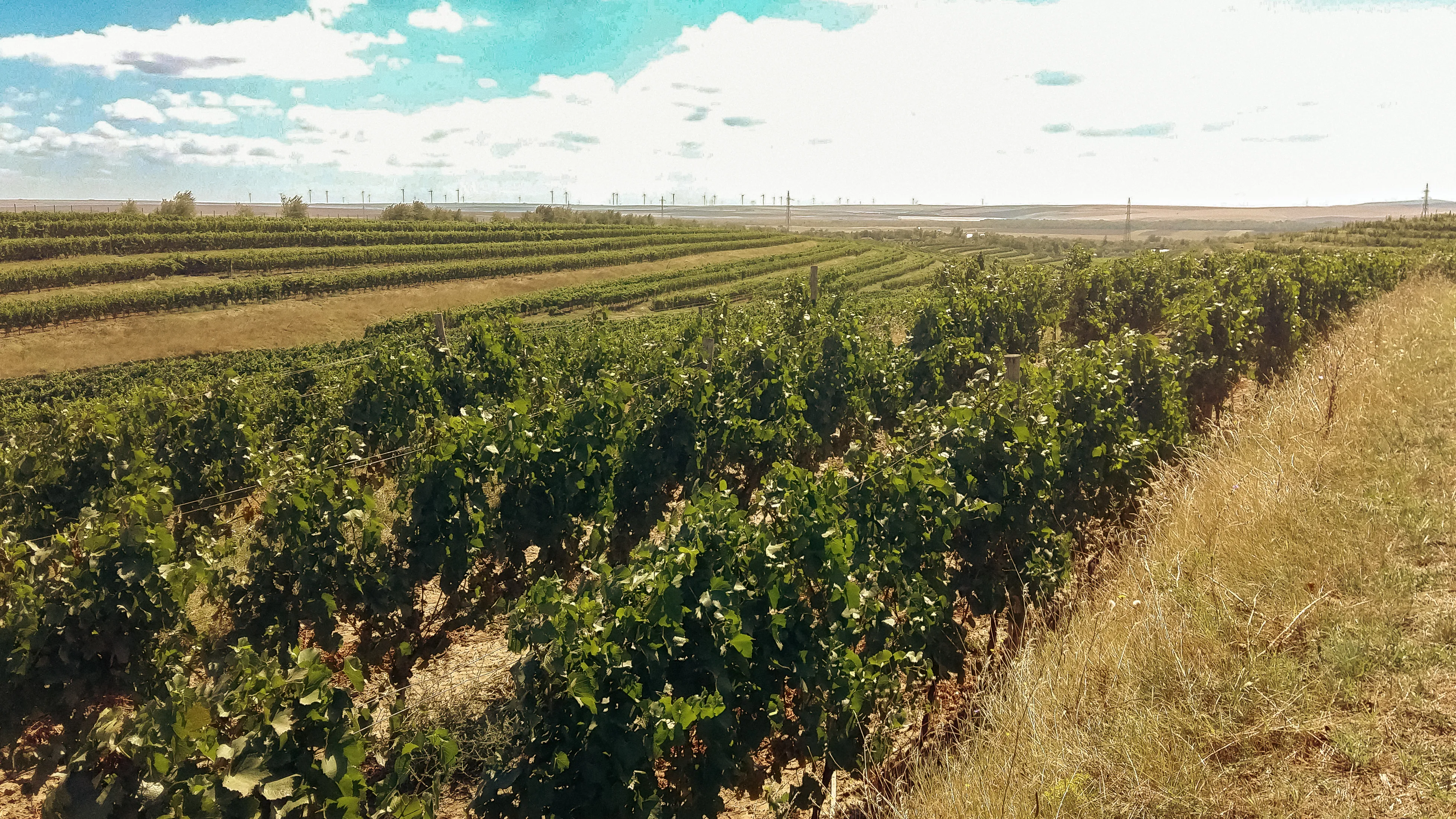
We don't try to "correct" the place. We try to work with it. We adapt the load per vine depending on the year. We don't pursue record yields, but balance. "The land inspires us, passion unites us" starts here: the winery in Topalu, the vineyard in Horia, connected by the Danube and the sun.